
So, as of late, I have taken to listening to comedy audiobooks. I think this is the best way to take in a comedian's book, especially if that comedian is of the stand-up variety.
Interestingly, the two books I have most recently listened to provide an etymological history of the word "hobo." More interestingly, these books provide two conflicting origins.
 The first book was Patton Oswalt's Zombie, Spaceship, Wasteland, a fantastic book, and well worth the time. In his essay, "Those Old Hobo Songs, They Still Speak to Us," Oswalt describes the roots of this term as follows: “'hobos' (a slang term that combines the words 'hope' and 'bowl of beans given to me for free by a woman who then initiated intercourse').”
Oswalt's essay is a pseudo-academic (or perhaps not so pseudo) analysis of a few short hobo songs. It's immensely entertaining and impressive. He surprisingly, but effectively, establishes an ethos of authority and delivers one of the best essays in the book. However, his ethos is undermined by the fact that he likely pulled all that information out of his arse. That being said, I bought his story, and as I listened I felt had been edified, gifted with a new piece of etymological knowledge that may one day come in handy if I'm ever on a game show.
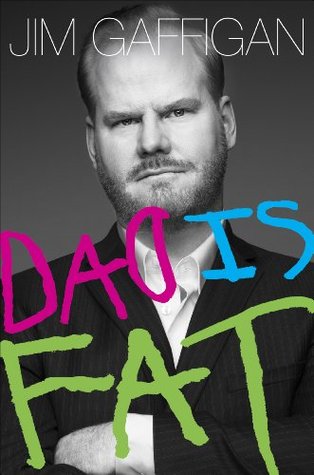 Then I listened to Jim Gaffigan's new book, Dad is Fat. In his book, Gaffigan details the difficulty of raising five kids an a two bedroom apartment in New York City. He goes on to say, "I should mention this apartment is on the Bowery in Manhattan. For those readers not presently recovering from heroin addiction who are familiar with this area of New York City, consider this: supposedly the term hobo comes from a description of the sketchy characters who were the main inhabitants on the cross streets of HOuston and BOwery. Hey, that’s right where I live. Isn’t that cool, hip, and ironic? The tiny overcrowded apartment where I’m raising my young children is in the same location where they manufacture homeless people. Location, location, location."
Gaffigan does not set himself up as an authority like Oswalt. He goes so far as to use a qualifier, "supposedly." Nevertheless, I am now stuck with these conflicting reports. What am I to do? Ask Google of course!
The Online Etymology Dictionary furnishes the following clarification "Hobo (n.): 1889, Western U.S., of unknown origin. Barnhart compares early 19c. English dialectal hawbuck 'lout, clumsy fellow, country bumpkin.' Or possibly from ho, boy, a workers' call on late 19c. western U.S. railroads."
This is completely different from the two aforementioned theories. I had to search further.
The Word Detective provides some more possible origins, stating, "There’s also a suggestion that 'hobo' is short for 'hopping boxcars,' and some maintain that 'hobo' is short for Hoboken, NJ, where many rail lines converged in the 19th century, making the city a natural gathering point for vagabonds."
Wikipedia, which as far as I am concerned should always be the authority, adds, "Bill Bryson suggests in Made in America (1998) that it could either come from the railroad greeting, 'Ho, beau!' or a syllabic abbreviation of 'homeward bound.'"
Needless to say, there are a lot of different explanations for this word's source. Personally, I like the "Homeward Bound" explanation, but that seems like one of the least likely. I like Patton's idea, but I think he made it up entirely. It's funny and seems like the kind of thing he'd say. I think Gaffigan's source is doubtful too. It's more likely to be coincidental than causal.
Anyways, that's way more info than anyone needs, but it's kind of cool.


